
IBC & tank cleaning equipment
Alfa Laval
GJ 9
High-Impact Rotary Jet Cleaning for IBCs, Totes & Small to Medium Tanks
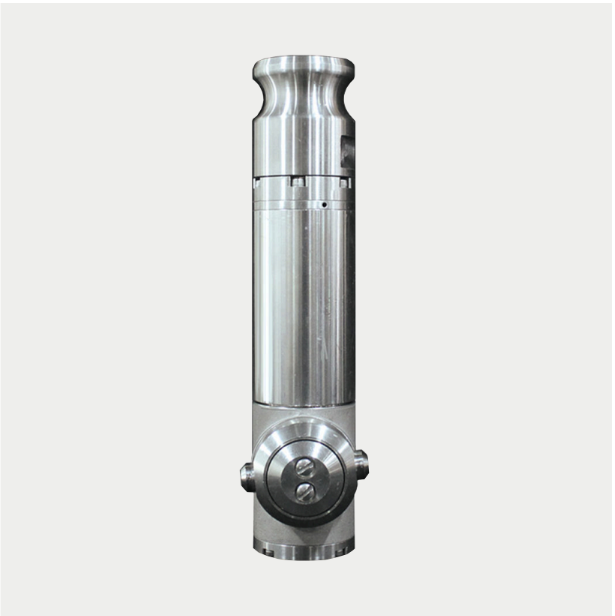
Formerly known as the GamaJet 9, the Alfa Laval GJ 9 is a compact, portable indexed rotary jet head designed for repeatable 360° interior cleaning in industrial and hygienic applications.
Product overview
Portable high-impact tank cleaning.
The Alfa Laval GJ 9 uses pressure and flow to create high-impact cleaning jets that move through a repeatable indexed 360° pattern. This provides consistent interior coverage while reducing dependence on manual cleaning.
Its slim profile and lightweight design make it especially useful for IBCs, totes, portable tanks, and other containers with restricted access openings.
Rotary jets provide stronger mechanical cleaning action than fixed spray devices.
The compact profile is designed to pass through common IBC access openings.
Designed to reduce water and cleaning-media use while maintaining strong cleaning performance.
Multiple nozzle and connection options allow the GJ 9 to be matched to different systems and applications.
Common applications
Where the GJ 9 Fits Best
How it works
Water Powers a Repeatable Indexed Cleaning Pattern
A properly matched pressure and flow source supplies water to the GJ 9. Water energy drives the internal turbine and gear train while the nozzle assembly indexes through a controlled 360° cleaning path.
Technical details
Specifications
Key published operating ranges and configuration information for the Alfa Laval GJ 9.
Cleaning method comparison
Rotary Jet Head vs. Static Spray Ball
| Cleaning Method | Cleaning Impact | Coverage | Water Use | Best For |
|---|---|---|---|---|
| Static Spray Ball | Low | Fixed spray pattern | Often higher | Light rinsing and easy-to-remove residues |
| Rotary Spray Head | Moderate | Rotating spray coverage | Moderate | General washing and lighter contamination |
| GJ 9 Rotary Jet Head | High impingement | Repeatable indexed 360° pattern | Designed for efficient use | Tough residues, IBCs, totes, and process tanks |
Typical residues
Common Cleaning Challenges
The GJ 9 is commonly selected for containers and tanks holding difficult industrial and hygienic residues.
System matching
What Determines the Right GJ 9 Setup?
Nozzle Diameter
Nozzle size affects jet impact, throw length, total flow, and required operating pressure.
Pressure & Flow
The pressure and flow source must be matched to the selected nozzle configuration and desired cleaning performance.
Tank Geometry
Tank diameter, height, access opening, internal obstructions, and mounting position all influence machine selection.
Residue Type
Residue hardness, viscosity, temperature, chemistry, and required cleanliness should be considered before selecting a setup.
Connection Type
Choose the inlet connection that best fits the cleaning system and installation.
Desired Cycle Time
Cleaning time depends on tank size, residue, pressure, flow, nozzle configuration, temperature, and chemistry.
Frequently asked questions
GJ 9 FAQ
Is the GamaJet 9 the same as the Alfa Laval GJ 9?
Yes. The GamaJet 9 is now marketed under the Alfa Laval name as the GJ 9.
What size tanks can the GJ 9 clean?
It is commonly used in tanks and IBCs approximately 4–20 feet in diameter and up to approximately 20 feet tall, depending on configuration and residue.
What pressure is required?
The published working range is approximately 45–580 PSI. The correct operating point depends on nozzle size, flow, tank geometry, and cleaning requirements.
Does the GJ 9 fit through an IBC opening?
Yes. Its slim profile is designed for insertion through common IBC access openings.
Can it clean paint and oil residues?
The GJ 9 is commonly used for difficult residues including paint, oil, food products, and home-care product contamination.
Can it be used in hygienic applications?
The machine is used in both industrial and hygienic applications. Suitability should be confirmed for the specific process, material, and sanitation requirements.
How is the cleaning pattern validated?
The cleaning process may be monitored or validated using compatible Alfa Laval Rotacheck equipment where required.
How long does a cleaning cycle take?
Typical cleaning cycles are often approximately 4–12 minutes, but actual time depends on residue, temperature, chemistry, tank size, pressure, flow, and nozzle setup.
What information is needed for a recommendation?
Please provide the tank or IBC dimensions, access opening, residue being removed, available GPM and PSI, water temperature, preferred connection, and desired cleaning time.
AaquaTools support
Parts, Rebuilds & System Support
Parts & Rebuild Help
Get help identifying seals, wear parts, rebuild components, and compatible replacement items.
Contact AaquaTools → 02Technical Documents
Find manuals, exploded views, flow tables, nozzle charts, and related technical resources.
View Manuals → 03System Matching
Need help matching pressure, flow, nozzle size, connection, or building a tote-washing setup?
Request Product Help →Need help with a GJ 9 or IBC cleaning system?
Let’s Match the GJ 9 to Your Application.
Tell us the tank or IBC dimensions, opening size, residue being removed, available GPM and PSI, water temperature, preferred connection, and desired cleaning time. We can help evaluate the right setup.